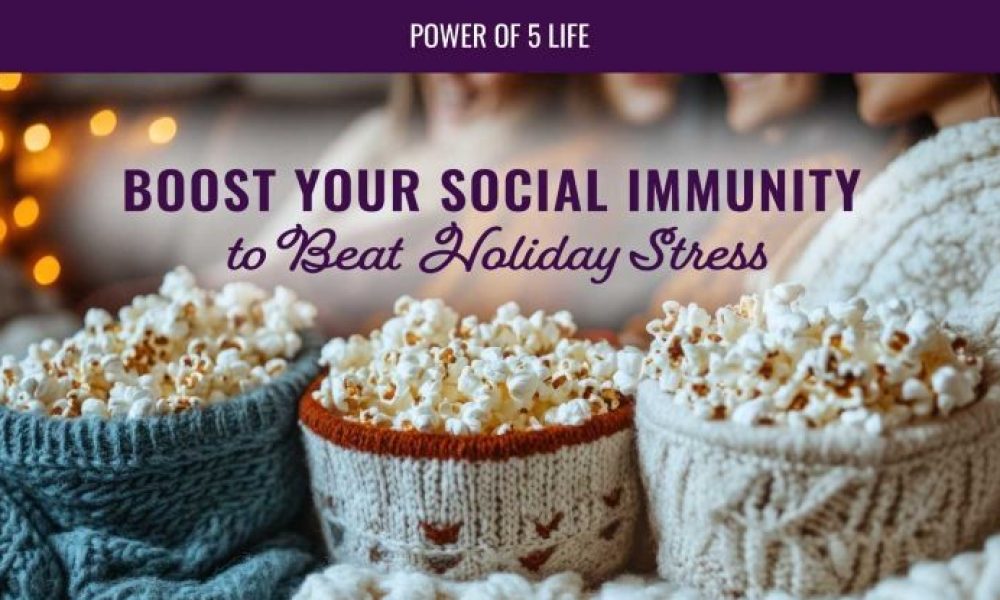
The quality of our relationships can act as a literal defense mechanism for our bodies. Think of strong relationships as your body’s internal defense system against the twin challenges of disease and seasonal stress. Research conclusively suggests that well-connected individuals boast stronger immune responses and even better recovery rates. This is especially relevant during the holidays when anxiety (and unrealistic expectations) spike and cold/flu risks rise.
The Health Angle: Relationships as a Stress Buffer
Here’s the science behind your social immunity:
- T-Cell Protection: Social support acts as a potent stress buffer. When stress becomes chronic—as it often does during the demanding holiday season—it suppresses your immune system, specifically weakening T-cell activity. Strong social ties mitigate this harmful effect. These lead to lower rates of inflammation and a reduced risk of chronic diseases (like heart disease and neurodegenerative diseases) over time.
- Cognitive Resilience: Beyond physical health, social engagement is a critical component of cognitive reserve, actively helping to delay cognitive decline and keep your brain sharp.
3 Strategies to Boost Your Social Immunity This Season
Here are three distinct ways to intentionally use your relationships to support your mental and physical health.
- Create an “Immunity Pod”: Intentionally dedicate time to a small, trusted group (your “Immunity Pod”) where you can be completely authentic and de-stress. This group should be a safe space to vent about holiday pressures or difficult family dynamics rather than bottling them up.
Our Example: Melissa has a monthly book club and weekly Mah Jong group. David regularly joins friends (new and old) for lunch or participates in group workout sessions. These are our designated, non-judgmental stress valves.
- The Reciprocal Act (Giving is Receiving): Focus on the health benefits of giving support, not just receiving it. Doing something kind for a friend—even something small like helping them wrap gifts or addressing cards—not only strengthens the relationship but provides the helper with a powerful mood boost and sense of purpose.
Our Example: We each make a point to check in on several friends who have been dealing with medical setbacks, offering practical help or just an ear. The positive feedback loop of this service is immensely rewarding.
- Schedule “Downtime Dates”: Encourage setting up non-obligatory, relaxing dates during the hectic season. The only agenda is relaxing and recharging together. This removes high-pressure expectations often found in typical holiday gatherings.
Ideas: Watching a holiday movie together, baking cookies, or simply meeting up for a quiet evening of board games.
It’s Worth It!
These activities might arrive just in time to boost your oxytocin and dopamine and put a bright smile on your face and the face of a companion.
Give these strategies a try this December!
Happy Holiday and New Year.
To a Long and Healthy Life,
David and Melissa Bernstein