
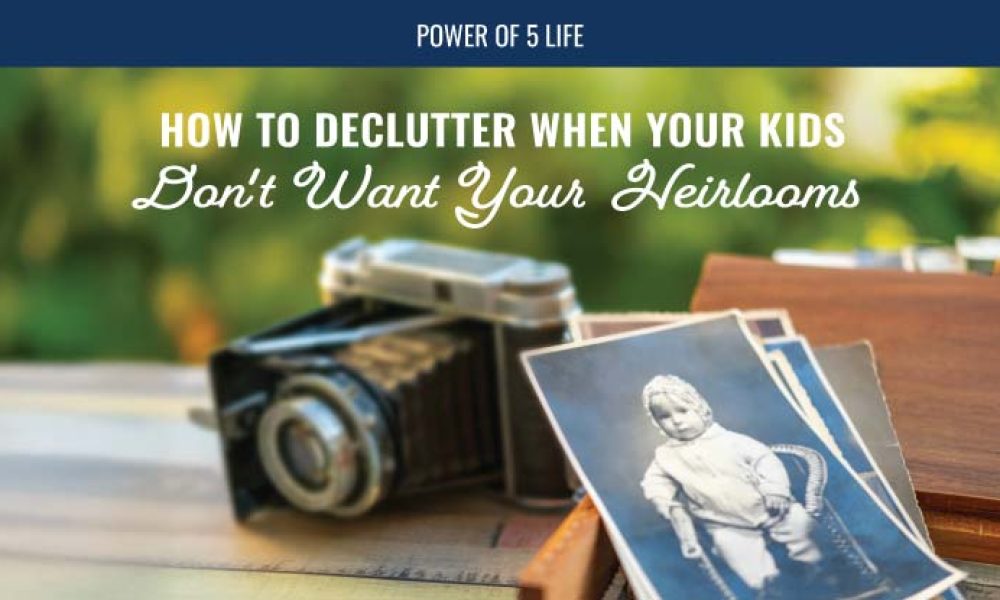
The Emotional Burden of Heirlooms: How to Declutter When Your Kids Don’t Want Your Stuff
The toughest box to pack during a move is the one marked “Sentimental.” These are the physical anchors to your past: family heirlooms, beloved keepsakes, and collections that hold a lifetime of memories. But here is the profound truth impacting senior relocation today: the next generation (Millennials and Gen Z) often does not want the physical objects you cherish.
The realization that your children don’t have space or desire for your China cabinet or heavy furniture can feel like a rejection of your history. However, decluttering doesn’t have to be a painful subtraction; it can be a process of intentional preservation.
As a healthcare professional, I advocate for moving from a place of guilt to a place of strategy. Successfully downsizing hinges on separating the memory from the object.
1. The Heirloom Audit: From Assumption to Ask
Before you assign an item to a child, stop assuming they want it. Generational tastes, smaller living spaces, and environmental concerns mean younger adults prioritize utility and minimalism over large antiques.
THE STRATEGY: Present a few select items to your children and grandchildren and give them a clear, short deadline (e.g., two weeks) to claim one or two truly meaningful pieces. Make it an act of generosity, not an assignment. If an item is not claimed, it moves without guilt to the donation or sale pile.
2. Preserve the Story, Not Just the Object
Your goal is not to preserve the weight of the silver tea set; it’s to preserve the story of the grandmother who used it. Digitization is the most powerful tool in emotional decluttering.
TIP: Before letting go, photograph large collections (like China, crystal, or military memorabilia). Write down the associated stories and create a simple, captioned digital album. You can share this album with the entire family instantly, and the memories will last far longer than the physical objects would on a dusty shelf.
3. The “Right Home” Principle
If an item is too valuable to discard but unwanted by your family, find it a “right home.” Donating to a specialized charity or a local organization is an act of honor, not failure.
EXAMPLES: Donate a lifetime of business suits to a “Dress for Success” program; give old tools to a local trade school; or donate a large book collection to a nursing home library. Finding a place where the item will be used and appreciated provides immense emotional relief.
Decluttering is not a rejection of your past; it is an act of care for your future self. By intentionally re-homing items and preserving memories digitally, you lighten your load and make room for the next, vibrant chapter of your life.
If tackling the deep emotional dive into heirlooms and clutter offered you a glimpse of freedom, then the complete, proactive roadmap for securing your health, dignity, and peace of mind during any major life transition is fully revealed in my essential new book, “WHEN IT’S TIME TO MOVE—ASSESSING THE WHY, EXPLORING THE HOW”, officially launching January 6, 2026!
David Bernstein, MD